
Small Habits That Save You Money (and Reduce Waste at Home)
When people think about saving money, they usually imagine strict budgets, cutting everything fun, or overhauling their entire routine.
But the truth is, the changes that make the biggest difference are usually small and seamlessly fit into your everyday routine. Saving money doesn't have to be overwhelming or suck the fun out of everything.
Here are a few simple, realistic habits that can help you spend less, waste less, and feel more in control of your home and grocery budget.
🛒 1. Order Groceries for Pickup (Not Delivery)
If you’ve ever walked into a grocery store with a list and walked out with ten extra things you didn’t plan to buy... you’re not alone. Grocery stores are designed to pull you off-list and get you to fill your cart with things you probably don't need.
Ordering through your grocery store’s app for pickup is one of the easiest ways to avoid getting sucked in or making unnecessary purchases.
When you order your groceries instead, you get:
-
Fewer impulse purchases
-
A running total as you shop
-
Time to adjust before checkout
-
Better budget awareness
Instead of doing mental math in the aisle, you'll see exactly what you’re spending as you add to your cart, and can make calm, intentional choices as a result.
You'd be surprised at how much money (and time!) this can save you in the long run.
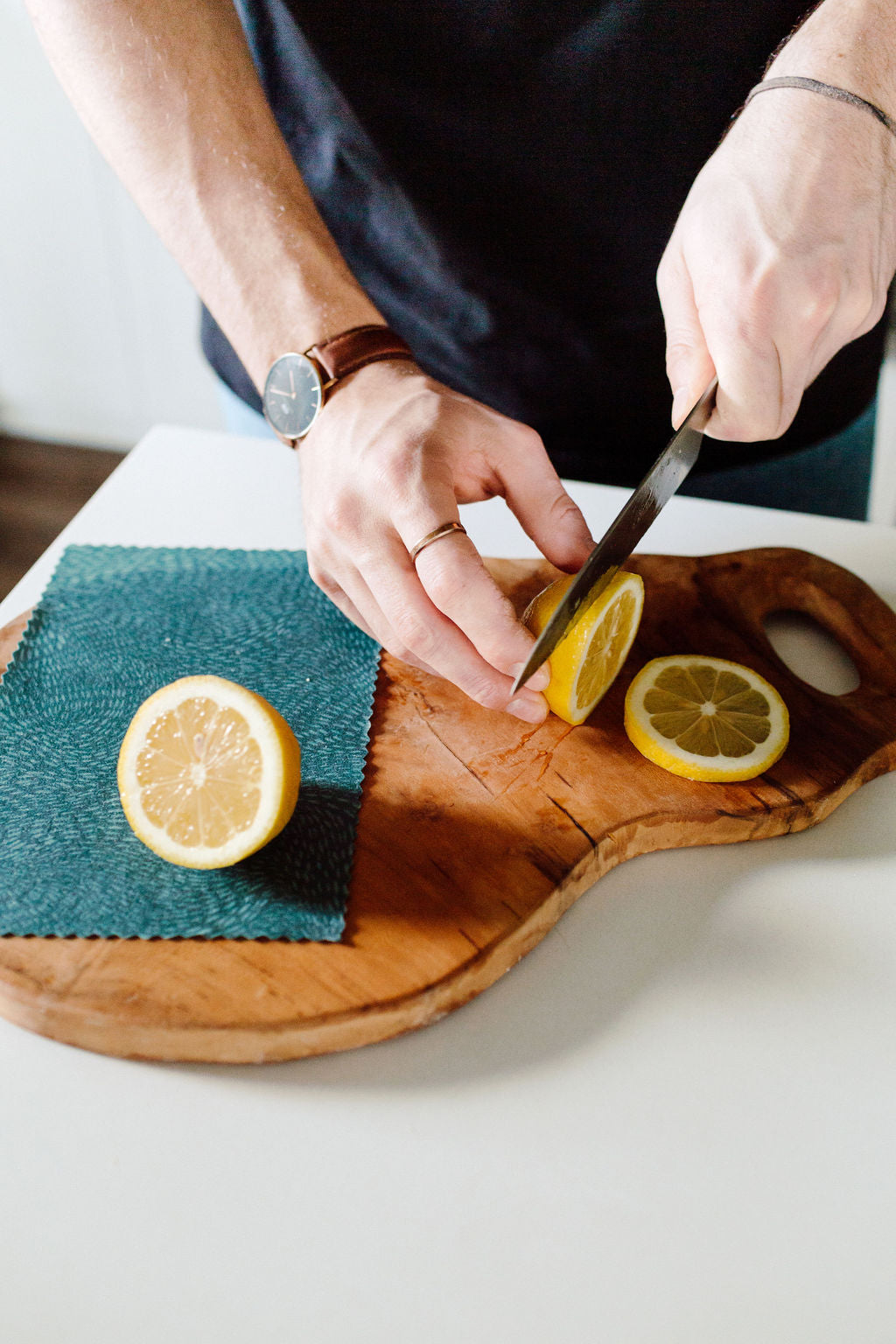
🐝 2. Use Beeswax Wraps to Prevent Food Waste
Did you know that the average household loses $1,300+ in wasted food every year? You might not notice it, but food waste is one of the biggest hidden money drains in most homes.
On a micro scale, it can look insignificant: a forgotten half avocado, wilted herbs, leftovers that spoil before you get to them. But add all of these up over the course of a year, and you'll see just how much money ended up in your compost.
This is where using a food storage method like beeswax wraps can really help. Beeswax wraps help create an antimicrobial and breathable seal that keeps food fresh longer—so you can actually use what you buy.
When food lasts longer:
-
You throw away less
-
You replace it less often
-
You stretch each grocery trip further
It’s a simple eco-friendly swap that pays for itself by helping you waste less.
🥬 3. Create a “Use-It-Up” Shelf in Your Fridge
This is one of the simplest habits—and one of the most effective.
Designate one shelf or drawer in your fridge as your “use-it-up” zone.
This is where you put:
-
Leftovers
-
Produce that’s nearing its prime
-
Open containers
-
Half-used ingredients
When everything that needs attention lives in one place, nothing gets forgotten in the back. It becomes your visual reminder: “This food still has value. Let’s use it up.”
Less waste. Less guilt. More savings.
♻️ 4. Swap Disposables for Reusables (Slowly)
You don’t need to replace everything at once. Just notice what you’re constantly rebuying.
A few swaps that quietly save money:
-
Paper towels → Swedish dishcloths
-
Plastic wrap → beeswax wraps
-
Disposable bags → silicone reusable produce or snack bags
Each individual swap feels small, but together, they reduce repeat purchases month after month... And over time, that really adds up!
❄️ 5. Freeze First, Not Last
Most of us move food to the freezer when it’s already “about to go bad.” Try flipping that habit and freeze food while it’s still fresh!
Great candidates:
-
Bread
-
Berries
-
Herbs
-
Sauces
-
Leftovers
-
Extra portions of meals
Freezing early extends food’s life by weeks (or even months!) and gives you easy backup meals for busy days. It’s truly one of the best ways to protect the money you’ve already spent.
⭐ Bonus: Do a Subscription Clean-Up Twice a Year
Subscriptions are sneaky. From streaming services, to apps, memberships, and even email newsletters—our money is really spread out over a variety of avenues.
Twice a year, do an audit. Set aside 20 minutes of your day and review:
-
Bank statements
-
App subscriptions
-
Online accounts
- The 'promotions' tab in your email inbox
Cancel or unsubscribe from anything you’re not actively using. Most people can find at least one or two things they no longer need—which means instant monthly savings.
Small Habits, Real Results
Remember, none of these habits are about being perfect, but implementing a few small changes can make life feel a little more intentional, and a little less wasteful.
When you use what you buy, store food well, stick to reusables and stay aware of where your money is going, you'll naturally spend less—without feeling like you're missing out on anything.
One habit at a time. That’s how real change sticks. 💛